← INDEX/06 OF 122026
Tmob AI Studio
An enterprise site, designed in the browser.
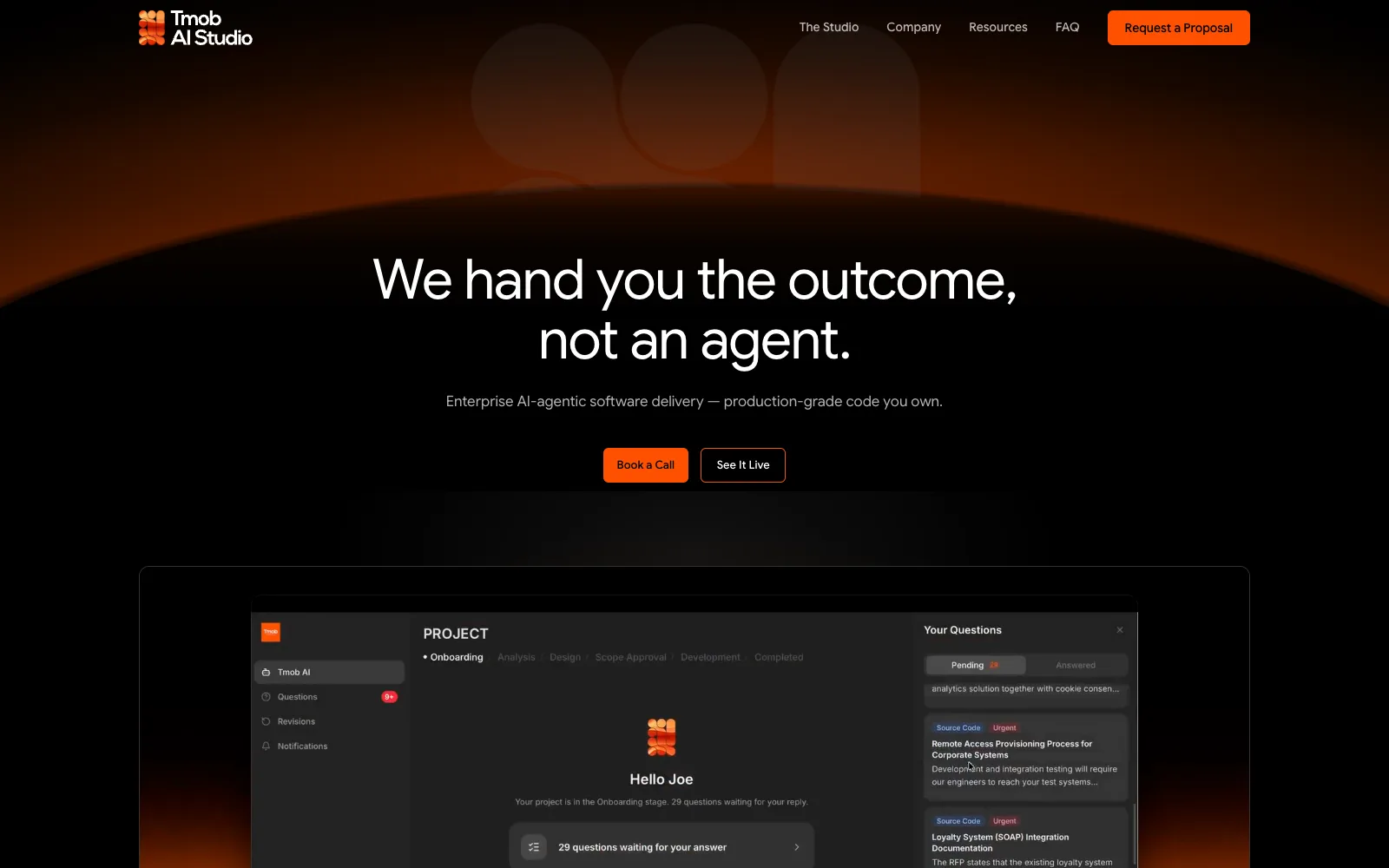
Tmob — 17 years of mobile delivery for banks and telcos — launched an AI-agentic software studio and needed a site that could sell it to enterprises. I designed and built it with Claude, no Figma at all: every design decision made in the browser, in prompts and diffs, on the real page.
- Role /
- Designed & built, solo
- Platform /
- Web — Next.js + React
- Tools /
- Claude Code — no Figma
- Client /
- Tmob (Thinks Mobility)
01 // The brief
Tmob has spent 17 years shipping mobile products for Vodafone Pay, Paycell by Turkcell, Halkbank, CarrefourSA and Istanbulkart. Their new studio sells something harder to explain: AI-agentic software delivery, where agents do the building and the client owns the outcome. The site had to make an enterprise buyer trust that in one scroll — and it had to feel like a company that ships, not a company that demos.
- 17
- years of delivery behind it
- 300+
- projects shipped
- 250M+
- daily users served
02 // No Figma
There was no design file. I designed the site in the browser with Claude: describe the intent, read the diff, look at the running page, adjust. The design system lives in the code from the first hour — a near-black ground, one orange, a geometric sans for display and a mono for the section kickers — so there was never a handoff gap between how it looked in a mockup and how it looked shipped, because there was no mockup.
What Figma usually buys you — trying variants quickly — prompts buy you faster. What it costs you — the drift between artboard and build — never happens, because the artboard is the build. The trade is that every decision has to be legible in words: if I couldn't say precisely what was wrong with a section, I couldn't fix it. That constraint turned out to be the discipline.
03 // Copy is the interface
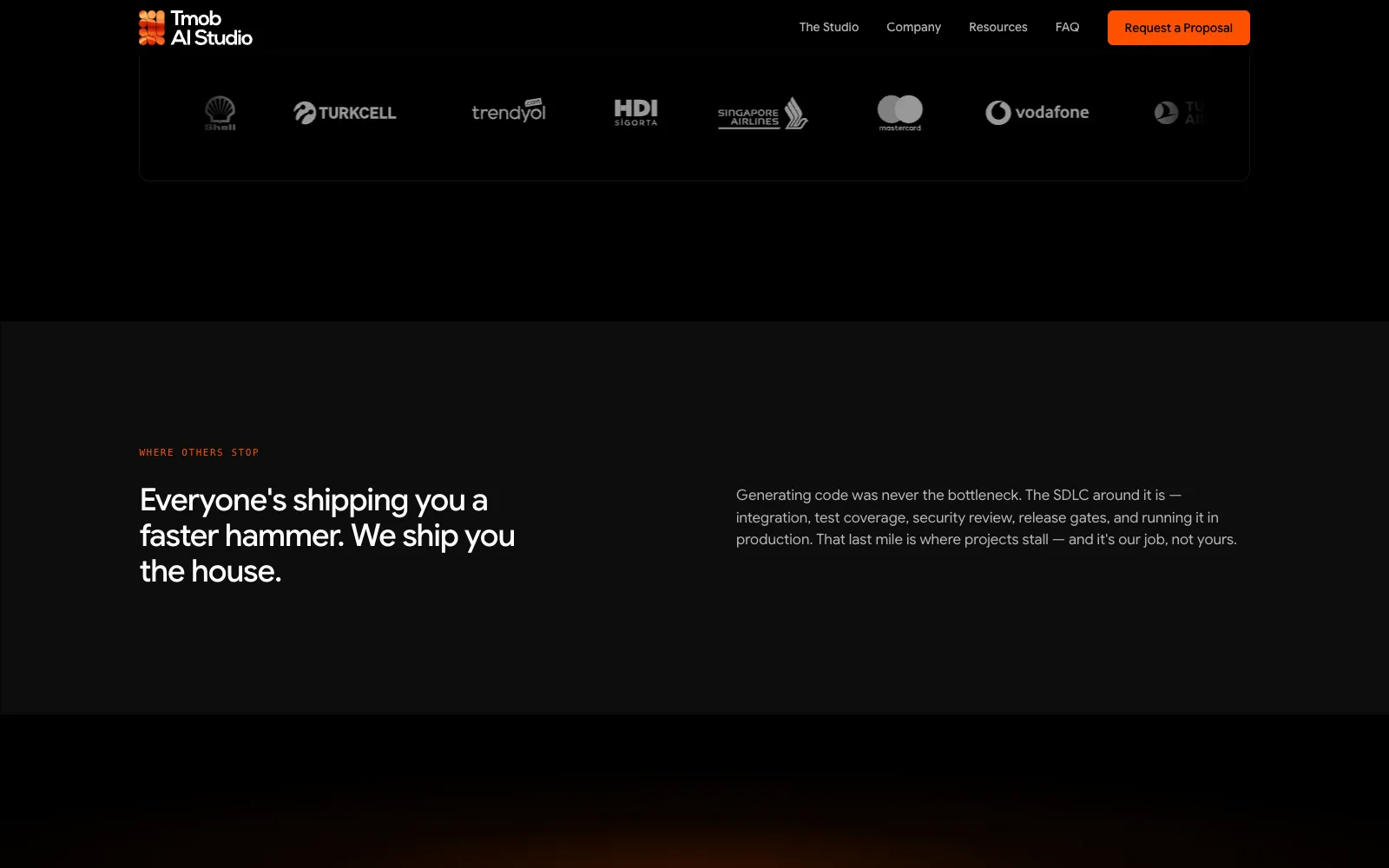
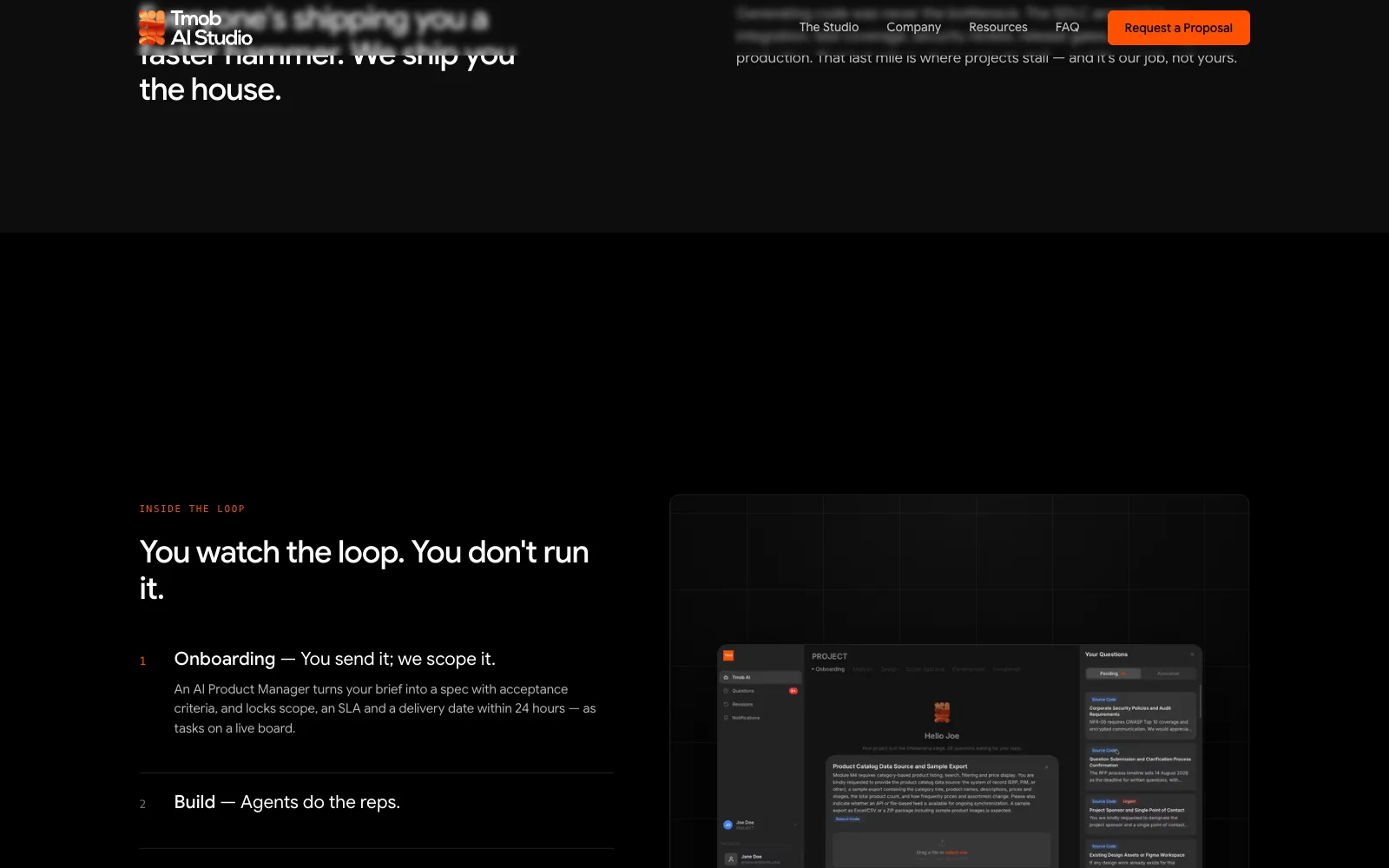
A site selling AI delivery to enterprises lives or dies on its words, so the copy was designed like a component system. Every section opens with a mono kicker — WHERE OTHERS STOP, INSIDE THE LOOP, ENTERPRISE-GRADE — and one claim that could stand alone on a slide.
“Everyone's shipping you a faster hammer. We ship you the house.”
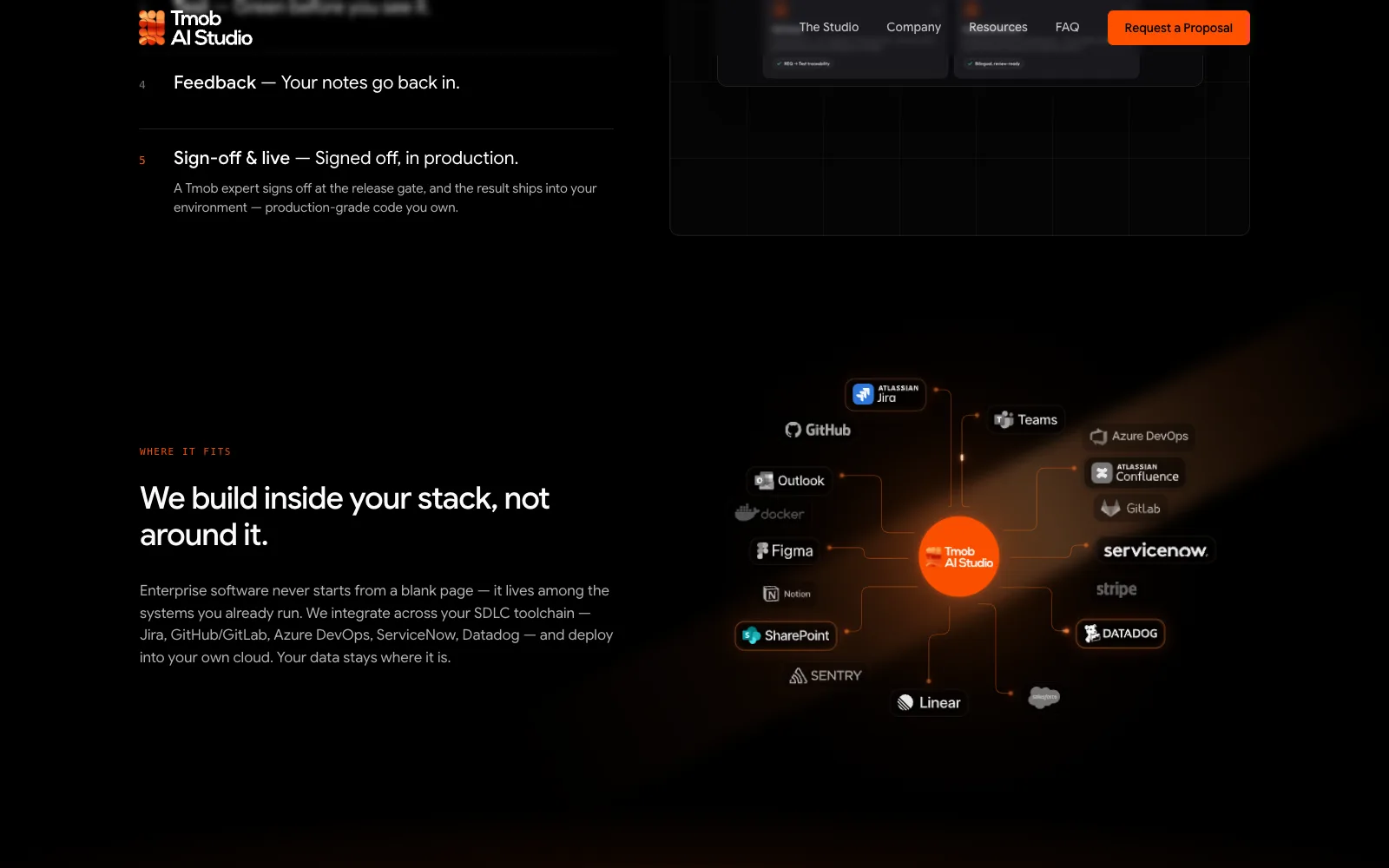
The centre of the page is the loop: five numbered steps from brief to production — onboarding, build, test, feedback, sign-off — each one paired with the real platform UI beside it. Not illustrations of the product; screenshots of it running. The hero says the same thing with a button: See It Live drops you into the actual board.
04 // Built for a defensible release
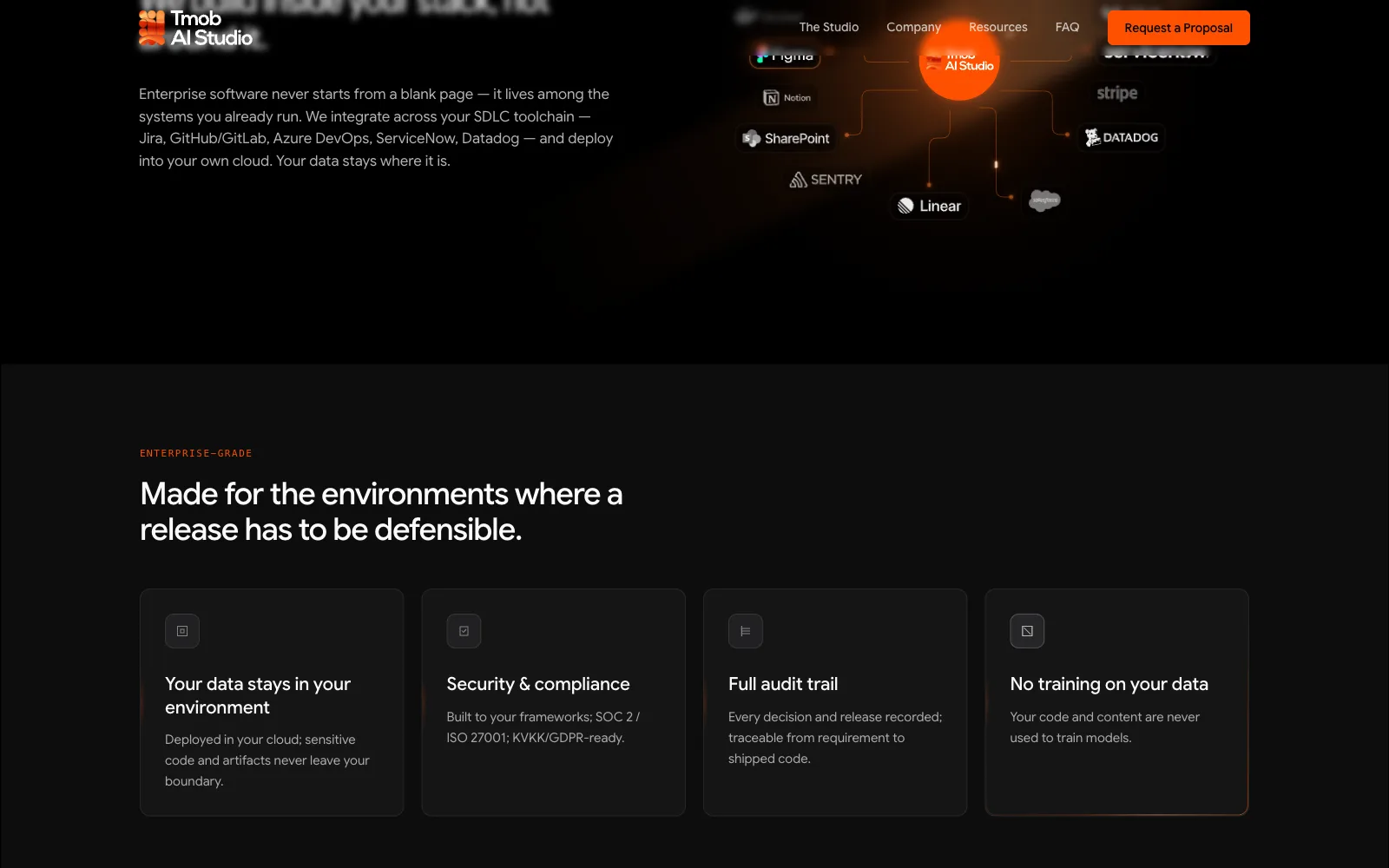
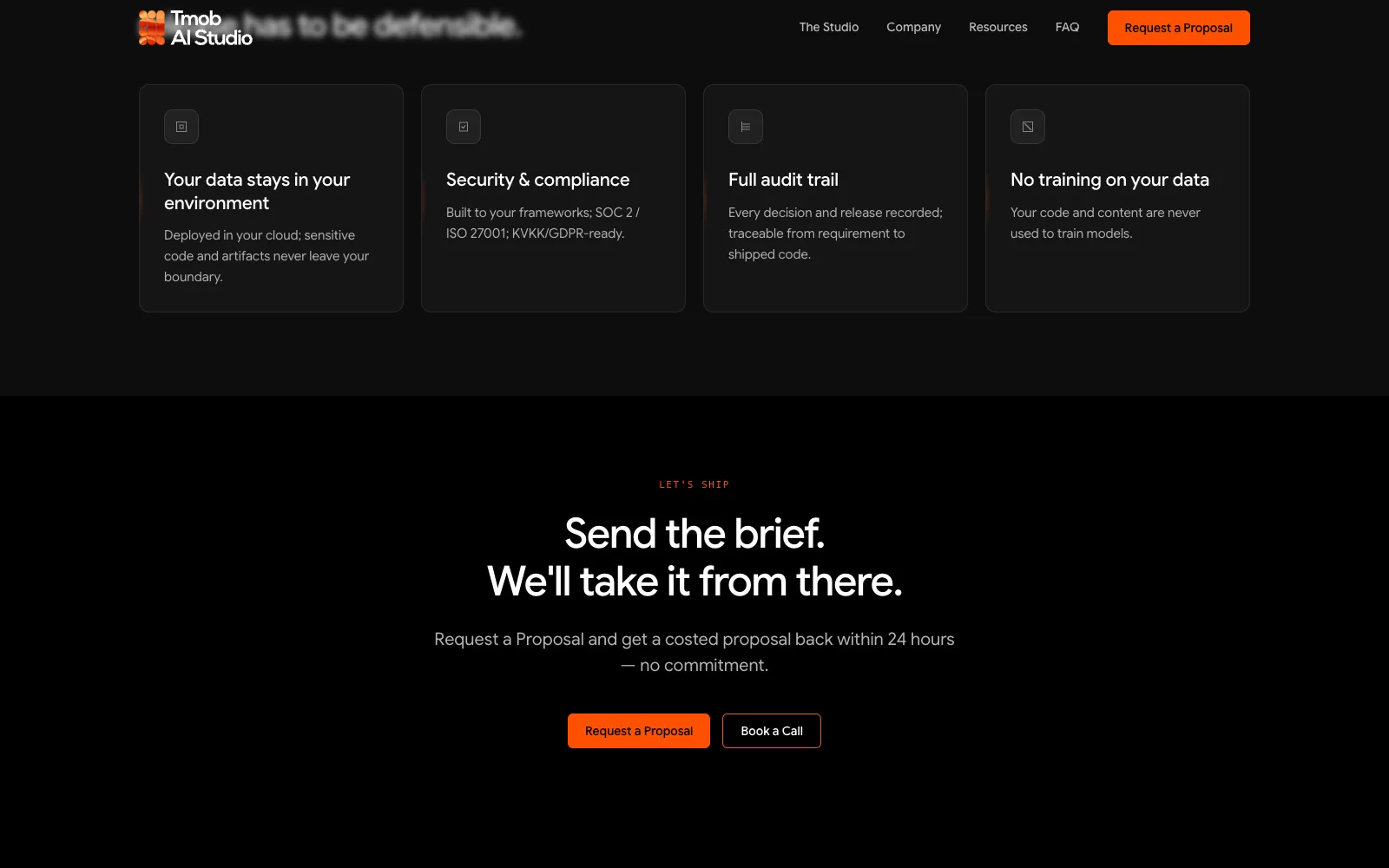
Enterprise buyers don't buy velocity, they buy defensibility. So the trust section is cards, not prose: your data stays in your environment, SOC 2 / ISO 27001, full audit trail, no training on your data. Four claims a procurement team can screenshot into a slide. The page closes the way the whole pitch runs — Send the brief. We'll take it from there.
[NEEDS: timeline — how long from first prompt to live — and one thing Claude got wrong that you caught and corrected]